

Does Putting Antiperspirant on Your Feet Actually Stop Shoe Smell?
- Yes, but only as prevention Antiperspirant reduces sweat output, which limits the moisture bacteria need — but it does nothing to eliminate odor already in your shoes.
- Stick formulas cause a residue problem The waxes in underarm antiperspirant sticks leave a film that transfers to socks and accumulates in shoe lining, making long-term odor worse.
- A two-step approach works better Use a talc-free powder on your feet to absorb sweat, and a dedicated shoe deodorizer to treat the bacteria already living inside your shoes.

Yes — antiperspirant on your feet reduces sweat, and less sweat means less food for the bacteria that produce odor. But it only works as prevention, not a fix. If your shoes already smell, the bacteria living in your insoles aren't going anywhere just because your feet arrived drier today.
Here's what actually matters: controlling moisture at the source is one piece of the puzzle, but the shoe itself needs attention too. More on that below.
Why Does Antiperspirant Reduce Foot Odor at All?
Antiperspirants use aluminum salts — typically aluminum chlorohydrate or aluminum zirconium tetrachlorohydrex — to temporarily plug your sweat ducts, reducing the volume of sweat that reaches your skin's surface. Fewer sweat ducts open means a drier microenvironment inside your shoe. That dryness matters because the primary odor-producing organism on feet, Brevibacterium linens, needs moisture to metabolize dead skin cells into the sulfur compounds (specifically methanethiol) responsible for that sharp, cheesy smell.
Bromodosis — the clinical term for smelly feet — is fundamentally a moisture problem. The bacteria aren't unusual or pathological. They're just doing what they do when conditions favor them: warm, dark, and wet. Antiperspirant makes the environment slightly less hospitable.
The catch is that antiperspirants are moisture blockers, not odor neutralizers. They don't break down the compounds already embedded in your insole foam. They don't touch the colonies of bacteria already living in the fabric lining of your shoe. They address the input (sweat) but not the existing ecosystem.
That's an important distinction.
What's the "Goo Problem" With Using Stick Antiperspirant on Your Feet?
Standard underarm stick antiperspirants contain waxes, emollients, and oils designed for thin underarm skin — when those ingredients meet the higher-output sweat of foot skin, they can create a sticky residue that actually traps bacteria against the skin and transfers a white waxy film to your socks. That film doesn't wash out easily, and over time it accumulates in the fabric lining of your shoe, giving bacteria even more surface area to colonize.
Foot skin is also significantly thicker than underarm skin — the stratum corneum (the outermost layer) is several times denser on the soles and heels. This means standard-strength aluminum formulations often don't penetrate effectively enough to reduce sweat output the way they do under your arms. You'd need a prescription-strength formula like aluminum chloride hexahydrate at 20%+ concentration (brands like Drysol) to see meaningful results on feet — and those are typically reserved for hyperhidrosis treatment, not everyday shoe odor management.
There's also a skin irritation risk worth knowing. Repeated application of aluminum-based products on foot skin — especially in the areas between toes where moisture already accumulates — can cause localized dryness and irritation. If you have any history of cracked heels or skin sensitivity, this is worth keeping in mind.
The transfer problem is real, and most people don't think about it.
Most people apply antiperspirant or powder in the morning right before putting on shoes — but the optimal window is actually the night before. Sweat glands are least active during sleep, which gives moisture-control ingredients time to absorb and form a barrier before your feet start working. Apply after your evening shower, let your feet dry completely for 5 minutes, then apply powder. You'll see noticeably better results than a rushed morning application.
So What Actually Works for Managing Foot Moisture?

The most effective approach is a two-step system: absorb moisture at the foot with a breathable powder, then treat the shoe itself with a dedicated deodorizer — because the foot and the shoe are separate environments that need separate solutions. If you only treat one, the other keeps feeding the problem. Our guide on whether to treat your foot or shoe first breaks this down in more detail.
For the foot side of the equation, a talc-free powder with zinc oxide and kaolin clay does what antiperspirant attempts to do — without the sticky residue. Zinc oxide is a proven skin protectant used in wound care and diaper rash treatments. Kaolin clay is gentle enough for sensitive facial skin. Together they absorb sweat passively, without blocking sweat glands or leaving a film. The benefits of talc-free foot powder go beyond just odor control — these ingredients are genuinely good for skin, not just inert.
For a completely free option: sprinkling plain baking soda inside your shoes overnight absorbs moisture and neutralizes some odor compounds. It's not as targeted as a dedicated powder, and it won't address the bacteria already living in your insoles — but it costs nothing and actually works as a maintenance step. (One caveat: if your shoes are already damp when you add baking soda, you might make things worse before they get better. More on why baking soda can backfire with sweat.)
If you want a daily powder that handles both moisture absorption and odor prevention in one step, Lumi's Natural Foot Powder uses arrowroot, kaolin clay, and zinc oxide with a small amount of lemongrass oil — the lemongrass scent fades in about 10 minutes, leaving no detectable fragrance.
Can You Use Regular Underarm Antiperspirant on Your Feet?
You can, but the results are modest and there are practical downsides — the formulation isn't designed for foot skin, the waxes transfer to socks, and over-the-counter strengths are often insufficient for the sweat volume feet produce.
If you're committed to trying it, spray-format antiperspirants (rather than stick) reduce the residue transfer problem significantly. Apply to clean, thoroughly dry feet — especially between the toes and on the ball of the foot where sweat glands are most concentrated. The American Academy of Dermatology notes that applying antiperspirant at night gives it time to work before sweating begins, which is more effective than morning application.
But be honest about what you're solving for. If your goal is preventing foot odor before it starts, a breathable powder does the same job without gland-blocking chemistry. If your goal is managing diagnosed hyperhidrosis, a prescription-strength aluminum chloride formula applied under dermatologist guidance is the clinically appropriate route — not a drugstore deodorant stick. And if your shoes already smell, neither approach addresses the bacterial colonies already living in the insole. That's a shoe problem, not a foot problem.
Treat the source, not just the symptom.
One last thing: if you've been using isopropyl alcohol as a quick odor fix between wears, there are some skin safety considerations worth knowing. Our breakdown of isopropyl alcohol for smelly feet covers the tradeoffs honestly.
Want to stop foot odor before it starts — without blocking your pores?
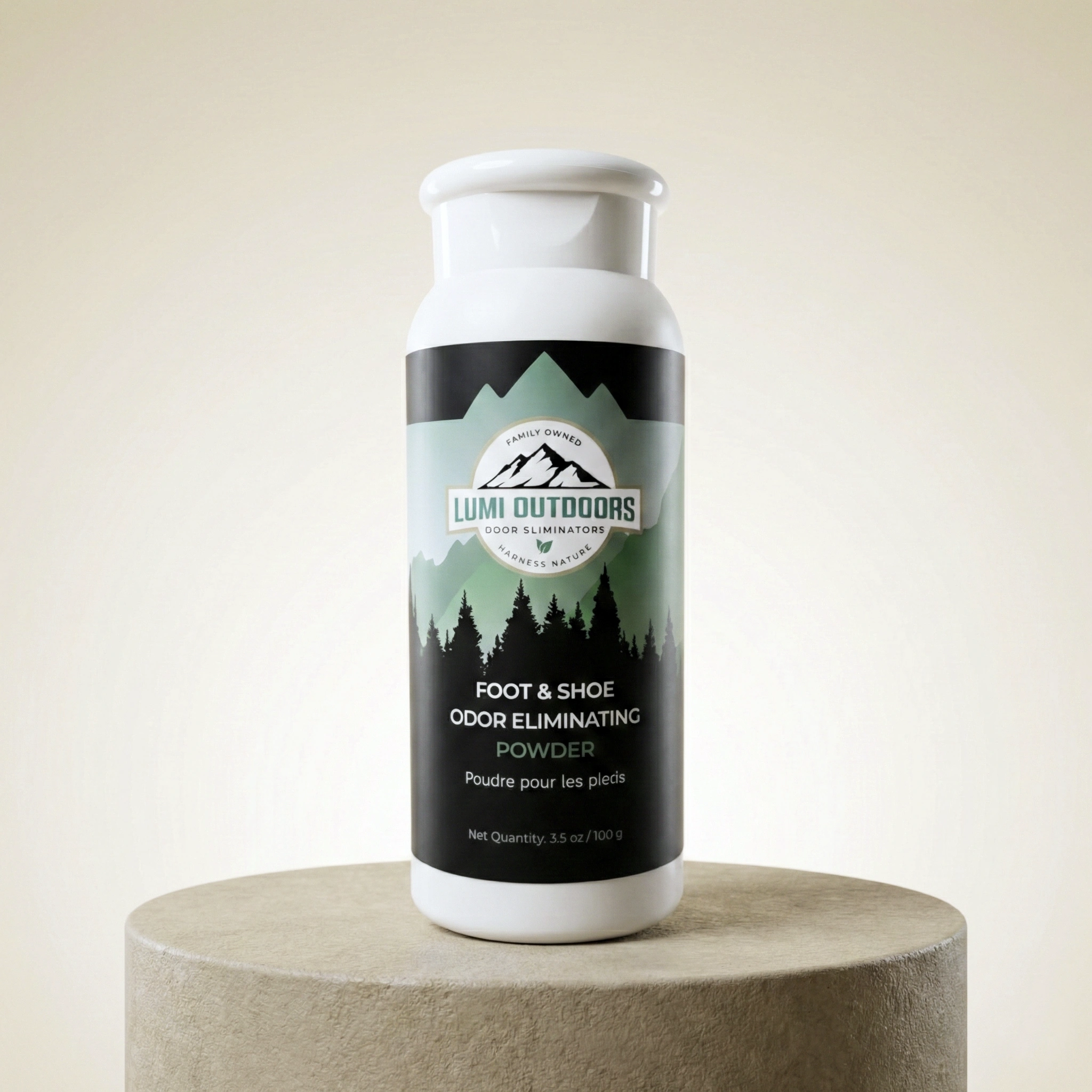
The best way to fight odor is to stop it before it starts. Our all-natural, talc-free foot powder is your first line of defense against mois...
- ABSORBS SWEAT & NEUTRALIZES ODOR
- ALL-NATURAL & TALC-FREE FORMULA
- PROUDLY FAMILY-OWNED & MADE IN UTAH
- THE "FRESH CONFIDENCE" GUARANTEE