
A sheepskin slipper odor remedy to make your wool slippers fresh again
- Skip the Washing Machine Submerging sheepskin shrinks the leather backing, mats the wool pile, and strips the natural lanolin — the damage is permanent.
- Moisture Is the Root Cause Bacteria can only produce odor when wool fibers stay damp, so moisture absorption is the mechanism that stops smell before it starts.
- The 1-2 Punch Works Best A mineral powder after each wear handles prevention, while an essential oil spray 2-3 times per week handles odor that's already formed.
- Rotation Is Non-Negotiable Sheepskin fibers need at least 24 hours of rest to fully dry out — wearing the same pair daily makes any remedy significantly less effective.

Sheepskin slippers smell because of isovaleric acid — a byproduct bacteria release when they break down sweat trapped in dense wool fibers. The fix isn't drowning them in baking soda or spraying on cheap fragrance. It's changing the internal environment so bacteria can't produce that acid in the first place.
Why Do Sheepskin Slippers Get So Smelly So Fast?
Sheepskin slippers trap warmth, moisture, and skin cells simultaneously — creating a bacteria-friendly environment that most footwear doesn't match. The wool fiber structure, which is what makes these slippers feel so good, is also what makes them such effective odor incubators.
Wool is naturally moisture-wicking, and that's genuinely impressive chemistry. A single merino fiber can absorb up to 30% of its own weight in moisture before it even begins to feel damp, according to research published by the Woolmark Company. But "wicking" moisture away from your skin and actually releasing it from the fiber are two different things. In a closed, dark slipper worn for hours, that moisture goes exactly nowhere.
The result is a warm, damp, protein-rich interior. Bacteria — primarily Brevibacterium and Staphylococcus epidermidis — colonize those wool fibers and begin metabolizing your dead skin cells. The byproduct of that process is isovaleric acid, which is the sharp, cheesy smell you're trying to get rid of. It's the same compound found in aged parmesan. Not exactly what you want your living room to smell like.
That's the real problem.
Unlike a sneaker with a removable insole or a leather boot you can wipe down, sheepskin has layers. You've got the leather backing on the outside, a natural suede-like surface, and dense wool pile on the inside. The bacteria live deep in those fibers, not on the surface. A quick spray of Febreze hits maybe 2mm of wool. The smell returns in 48 hours because the source never got addressed.
Why Do Common DIY Remedies Damage Sheepskin More Than They Help?
Most DIY shoe odor fixes — baking soda, isopropyl alcohol, and machine washing — cause structural damage to sheepskin that is irreversible. The very remedies that work fine on canvas sneakers or rubber-soled boots can permanently ruin the lanolin content, leather backing, and fiber integrity of wool-lined footwear.
Isopropyl alcohol is the first culprit. It's a solvent, and it's genuinely effective at disrupting bacterial cell membranes — but it also strips the natural oils from the leather base of sheepskin. One or two applications and you probably won't notice anything. But alcohol-based sprays used regularly will dry and eventually crack the backing. That's not a reversible problem. You can't re-oil sheepskin leather back to factory condition once it's compromised.
Baking soda has a more subtle failure mode. It absorbs surface moisture, which sounds right, but there's a catch: when baking soda mixes with sweat in a warm environment, it can actually intensify odor rather than neutralize it. The sodium bicarbonate reacts with the fatty acids in sweat, and in dense wool fibers, it clumps. That gritty residue embeds itself in the pile and is nearly impossible to fully shake out. You end up with slippers that feel chalky, smell faintly of sweat-and-baking-soda, and are slightly scratchy against your feet.
The washing machine myth deserves its own paragraph.
Submerging sheepskin — even on a gentle cycle — saturates the leather backing and causes it to stiffen and shrink as it dries. The wool pile mats and loses its loft. The natural lanolin that gives sheepskin its softness leaches out with detergent. If you've ever washed a pair of sheepskin slippers and wondered why they felt stiff and cardboard-y afterward, that's exactly what happened. There's no un-matting that wool once it's felted from heat and agitation.
So what actually works, without wrecking the fibers?
If you're not ready to buy anything yet, a white vinegar solution (1 part vinegar to 3 parts water, applied lightly with a cloth and air-dried fully) addresses the pH balance inside the slipper without damaging the leather. It won't last as long as a dedicated treatment, but it's a legitimate first step. You can find a full breakdown of home remedies for smelly slippers here if you want to explore the free options first.
Most people shake powder out from the slipper opening — but the bacteria live at the toe box, not near the heel. After dusting the powder in, pick up the slipper and tilt it so the powder rolls forward toward the toe, then tap the sole three or four times to work it into the fiber tips where odor actually forms. It takes five extra seconds and makes a real difference in how deep the absorption goes.
The right sheepskin slipper odor remedy works with the fiber's natural properties, not against them. That means moisture absorption without saturation, odor neutralization without harsh solvents, and no ingredients that alter the leather's structural integrity.
Here's how the mechanisms compare across the most common approaches:
| Feature | Foot Powder | Essential Oil Spray | Baking Soda (DIY) | Machine Wash |
|---|---|---|---|---|
| Safe for sheepskin leather | Yes — no moisture saturation | Yes — fine mist only, dries quickly | Risk — clumps and embeds in pile | No — shrinks leather, mats wool |
| Odor prevention (proactive) | Strong — absorbs moisture before bacteria can act | Moderate — neutralizes existing odor | Weak — absorbs surface moisture only | One-time reset only |
| Odor elimination (reactive) | Moderate — reduces bacterial food source | Strong — essential oil compounds neutralize odor molecules | Weak — often worsens odor when mixed with sweat | Strong initially, but damages fibers over time |
| Fiber and leather safety (long-term) | Excellent — all mineral, pH neutral | Good — no solvents, dries fully in 15-20 minutes | Poor — gritty residue embeds in wool pile | Poor — permanent structural damage after 1-2 washes |
| Cost per use | Low — lasts months with daily use | Low-moderate — 1-2 sprays per session | Very low — a $1 box lasts a year | Free if you own a washer |
| Pet safety | Safe for cats and dogs | Use caution with cats — allow full dry time | Safe | Safe |
How Does Moisture Absorption Actually Prevent Odor in Wool Slippers?
Bacteria can only produce odor when moisture is present. A talc-free mineral powder applied inside your slippers draws moisture out of the wool fibers at the molecular level, creating a dry environment that breaks the bacterial growth cycle before the smell ever starts.
Think of arrowroot powder like a sponge at the molecular level. Arrowroot starch has an irregular, porous surface structure that draws moisture in through capillary action — similar to how a sponge pulls water from a countertop. Talc, by contrast, is a flat silicate mineral that sits on surfaces without actually absorbing anything. That's the difference between your feet staying genuinely dry for 6-8 hours versus feeling chalky by mid-morning.
Kaolin clay adds a second mechanism. It's used in skincare for exactly this reason: its layered mineral structure has a high surface area that adsorbs (not absorbs — binds to the surface rather than pulling inside) oil, protein residue, and moisture simultaneously. According to the National Institutes of Health research on clay minerals in dermatology, kaolin is also pH-neutral and gentle enough for sensitive skin — which matters a lot when you're wearing these slippers barefoot.
Zinc oxide completes the mineral trio. It's the same ingredient in diaper rash cream and mineral sunscreen, and it works here for a similar reason: it creates a micro-barrier on skin and fiber surfaces that reduces direct bacterial contact. The formula in the Natural Foot Powder combines all three — arrowroot, kaolin, and zinc oxide — with bentonite clay and a 0.5% lemongrass oil for a light, clean scent that doesn't overpower the room.
Worth knowing: because all these ingredients are mineral and plant-based at these concentrations, this powder is also safe for households with cats and dogs. That matters if your pet has a habit of nosing around your slippers.
If you want to combine proactive moisture control with targeted odor elimination, here's what you'll need alongside a quality foot powder:
What You'll Need
- Soft-bristled shoe brush (for gentle powder distribution)
- Cedar shoe trees (to maintain slipper shape during drying)
- Natural Foot Powder Check Price →
- Thin merino wool socks (to reduce direct fiber contact)
What Makes Essential Oil Sprays Work Differently Than Fragrance Sprays?

Fragrance sprays mask odor with a stronger smell layered on top. Essential oil-based deodorizers work differently — specific compounds in lemon eucalyptus oil interact with odor molecules directly, while the spray's fine mist distributes moisture-light enough to refresh wool without saturating the leather beneath.
Lemon eucalyptus oil contains a compound called p-menthane-3,8-diol (PMD), which has a demonstrated effect on bacterial activity according to research from the University of Florida's Entomology and Nematology department (primarily studied in pest control, but the antibacterial mechanism transfers to surface applications). More practically: it changes the surface chemistry of what it contacts, which is why the smell doesn't return in a day or two the way it does after a fragrance spray.
The delivery mechanism matters too. A fine-mist nozzle disperses the formula as tiny droplets that land evenly across the wool surface without pooling. One or two short bursts at 6-8 inches from the slipper opening is the right amount. You're aiming to coat the fiber tips, not wet the material through. Soaking the interior with any spray — even a gentle one — risks pushing moisture into the leather backing, which is the exact condition that causes problems.
It's not even close to the same as spraying perfume inside your slipper.
Customer reviews consistently report that the lemon eucalyptus scent from the Extra Strength Shoe Deodorizer Spray is noticeable for the first 10-15 minutes, then fades to neutral as it dries. That's the essential oil doing its job and then dissipating — not a synthetic fragrance that lingers artificially. For households with cats, though, allow the slippers to dry fully in a well-ventilated area or closed closet before your cat can access them. Eucalyptus and citrus oils can be irritating to cats on direct contact.
Here's a candid breakdown of how the spray performs across the factors that matter most for sheepskin care:
- Arrowroot and kaolin clay absorb moisture deep in wool pile — not just on the surface
- Zinc oxide is actively beneficial for skin, not just non-toxic — same ingredient used in diaper rash cream
- All-mineral formula is safe for cats and dogs at normal use concentrations
- Talc-free: no respiratory concerns, no cakey residue on dark-colored wool
- Lemongrass scent fades to neutral within minutes — not artificially perfumed
- Requires 4+ hours of sitting time to reach maximum absorption — not an instant fix
- Powder can leave faint white residue visible in dark-colored slipper liners if over-applied
What's the Best Daily Routine for Keeping Sheepskin Slippers Fresh Long-Term?

The most effective long-term approach combines a moisture-absorbing powder applied after each wear with a light essential oil spray used 2-3 times per week. Pairing this with a rotation strategy — never wearing the same pair two days in a row — allows wool fibers to fully dry between uses and resets the internal environment before bacteria can re-establish.
The rotation piece is underrated. Wool fibers that are compressed and damp for 8+ hours daily never fully recover their loft or release retained moisture before the next wear. Two days of rest isn't a luxury — it's the minimum drying time for dense sheepskin pile. If you only own one pair, consider placing them near (not on top of) a heat vent for 30-60 minutes after wearing, then moving them to a cool, ventilated spot to finish air-drying.
Here's the actual routine, step by step:
- After each wear: Dust 1-2 teaspoons of Natural Foot Powder inside each slipper. Tap the slipper gently to distribute the powder into the wool fibers rather than leaving it sitting on top. Let it sit for at least 4 hours — overnight is better.
- After sitting: Shake out the excess powder over a trash can or outdoors. A low-suction hand vacuum works well for removing residue from the pile without pulling fibers. Don't use a full-power vacuum — it can stress the wool roots.
- 2-3 times per week: Hold the Extra Strength Shoe Deodorizer Spray 6-8 inches from the slipper opening and use 1-2 short bursts per slipper. Do not saturate. Place slippers in a well-ventilated area to dry completely before wearing again — 15-20 minutes is usually enough.
- Weekly: Set slippers in indirect sunlight for 30-60 minutes. UV exposure provides natural sanitization, and the airflow reduces residual moisture. Direct midday sun for extended periods can fade dye and weaken leather, so a shaded spot outdoors or a windowsill with filtered light is ideal.
The 1-2 punch of powder and spray works because they address different parts of the problem. Powder is proactive — it interrupts the moisture cycle before bacteria get started. Spray is reactive — it neutralizes odor compounds that have already formed. Together, they cover both the prevention and treatment side without ever saturating the fibers.
One detail that most guides miss: wearing thin merino wool socks inside your sheepskin slippers significantly extends the life of the lining. Merino creates a moisture barrier between your foot and the wool pile, so skin cells and sweat deposit into the sock rather than directly into the slipper fibers. A sock you can wash daily is much easier to maintain than a slipper lining you can't. It also extends the interval between powder and spray treatments from daily to every 2-3 days. That's a real difference in effort over a season.
And if your slippers happen to be UGG boots or any other sheepskin-lined footwear — the process is identical. The leather-backed sheepskin construction is consistent across brands, so this routine applies directly without modification.
One last thing worth knowing: if the odor has a distinctly sour or unusually strong smell that doesn't respond to any of the above after two weeks of consistent treatment, it may be worth checking with a podiatrist. Certain skin conditions — specifically bromodosis, which is chronic foot odor linked to excessive sweating — can create bacterial loads in footwear that outpace standard deodorizing approaches. The full breakdown of talc-free foot powder benefits covers how mineral-based formulas specifically help with hyperhidrosis, which is the most common underlying cause.
- Arrowroot and kaolin clay absorb moisture deep in wool pile — not just on the surface
- Zinc oxide is actively beneficial for skin, not just non-toxic — same ingredient used in diaper rash cream
- All-mineral formula is safe for cats and dogs at normal use concentrations
- Talc-free: no respiratory concerns, no cakey residue on dark-colored wool
- Lemongrass scent fades to neutral within minutes — not artificially perfumed
- Requires 4+ hours of sitting time to reach maximum absorption — not an instant fix
- Powder can leave faint white residue visible in dark-colored slipper liners if over-applied
Ready to stop the smell before it starts?
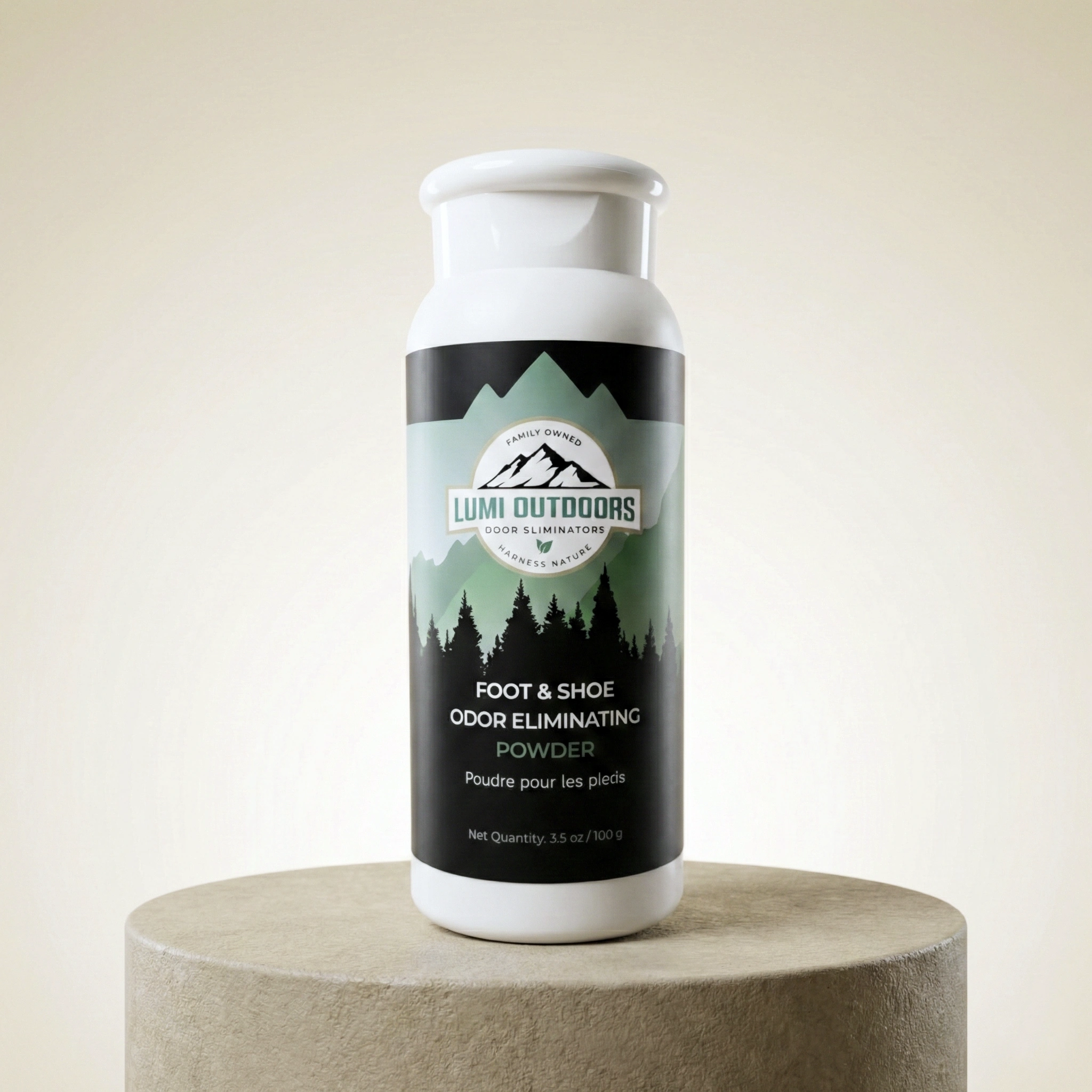
The best way to fight odor is to stop it before it starts. Our all-natural, talc-free foot powder is your first line of defense against mois...
- ABSORBS SWEAT & NEUTRALIZES ODOR
- ALL-NATURAL & TALC-FREE FORMULA
- PROUDLY FAMILY-OWNED & MADE IN UTAH
- THE "FRESH CONFIDENCE" GUARANTEE