

3 Surprising Reasons to Use Antiperspirant on Your Feet for Fresh Shoes
- Treat the foot, not just the shoe Antiperspirant applied to your feet stops sweat before it reaches the shoe liner, cutting off the moisture bacteria need to produce odor.
- Timing is everything Nighttime application works far better than morning — your sweat glands are least active while you sleep, so the formula has hours to take effect.
- Deodorant is not a substitute Regular underarm deodorant only masks scent and leaves a slick residue on skin — a mineral powder or true antiperspirant is what actually controls moisture.

Yes, applying antiperspirant to your feet works — and it's arguably more effective than treating the shoe itself. Your feet contain roughly 250,000 sweat glands packed into a relatively small surface area, according to the American Podiatric Medical Association. Stop the moisture at the source and you starve the odor-causing bacteria before they ever colonize your shoe liner.
Here's what most odor guides skip: the foot-first approach is proactive, not reactive. Every spray and powder aimed at the shoe is mopping up a mess that already happened.
Why Do Feet Produce So Much Sweat in the First Place?
Feet sweat more than almost any other body part because they're packed with eccrine glands — the kind that respond to heat and physical stress, not just emotions. Inside a shoe, that sweat has nowhere to go, creating the warm, moist environment where Brevibacterium and Staphylococcus epidermidis thrive and produce isovaleric acid, the compound responsible for the classic "gym locker" smell.
Think of it as a petri dish effect. A synthetic shoe liner traps heat and moisture, accelerating the breakdown of sweat into volatile fatty acids. The liner itself doesn't smell — it's the bacterial metabolism happening inside it. That's why treating the shoe liner with spray feels effective for a day or two, then the smell rebounds. The bacteria are still producing the same compounds because the wet conditions haven't changed.
Cotton socks make this worse. A 2014 review in the Journal of the American Academy of Dermatology noted that cotton retains moisture against the skin rather than wicking it away, extending the bacterial feast. Moisture-wicking blends — merino wool or synthetic — reduce that contact time significantly.
That's the real problem.
You can spray your shoes every night and still lose the war if the foot itself is producing a half-liter of sweat per day (a realistic figure for someone on their feet at work). The shoe is downstream. The foot is the source.
What Are the 3 Surprising Benefits of Using Antiperspirant on Feet?
The three main benefits are: breaking the bacterial cycle by eliminating the moisture bacteria need, reducing friction and blisters by keeping skin dry inside the shoe, and extending the life of the shoe itself by protecting foam and leather from constant moisture exposure.
Breaking the Bacterial Cycle
Antiperspirant works on feet through the same mechanism it uses underarm: aluminum-based compounds (typically aluminum chlorohydrate) temporarily plug the eccrine gland ducts, reducing sweat output. Less sweat means less bacterial substrate — and less of the isovaleric acid that makes you want to leave the room when someone takes their shoes off. No moisture, no smell. Simple as that.
Friction and Blister Prevention
Dry feet grip your sock differently than wet feet do. Sweat creates a slip-slide dynamic inside the shoe that generates friction hot spots — exactly where blisters form. Athletes who apply antiperspirant to their soles before long runs or games report noticeably fewer blisters. The American Podiatric Medical Association recommends moisture management as a first-line strategy for blister prevention, for exactly this reason.
Extending Shoe Longevity
This one surprises most people. Constant moisture degrades EVA foam midsoles, warps leather uppers, and breaks down the glue bonds holding outsoles in place. A good pair of work boots or running shoes represents a real investment. Keeping the internal environment dry can meaningfully extend the life of that footwear — which is why podiatrists also recommend rotating between two pairs to allow full drying between wears.
Most people apply antiperspirant to the arch of the foot and call it done — but the highest sweat and bacterial density is actually in the toe webs and the ball of the foot. Get between each toe and press the product lightly into the skin rather than just swiping across the surface. That 20 extra seconds of application makes the difference between a shoe that smells fine at noon and one that doesn't.
How Do You Actually Apply Antiperspirant on Feet for Best Results?

Apply antiperspirant to clean, completely dry feet the night before — not the morning of. Nighttime application gives the active ingredient 6-8 hours to interact with sweat gland ducts while your eccrine glands are at their least active, making it significantly more effective than a rushed morning swipe.
The key areas are the soles and between the toes, where sweat density is highest. Most people apply it only to the arch, which misses the ball of the foot and the toe webs — the two zones where Brevibacterium linens concentrations are typically highest.
A few practical notes worth knowing:
- Use an unscented stick or roll-on to avoid fragrance buildup inside your shoe
- Let it dry fully (about 2 minutes) before putting on socks
- Start with every-other-day application — daily use can occasionally cause mild irritation on thinner foot skin
- If you experience any redness, switch to a mineral-based powder alternative (more on that below)
The aluminum dilemma is real for some users. If your skin is sensitive or you'd rather skip the aluminum compounds entirely, a talc-free mineral powder is the most effective natural alternative. Lumi's Natural Foot Powder uses arrowroot powder, kaolin clay, and zinc oxide to absorb moisture without any aluminum or synthetic additives — it's what I'd reach for if standard antiperspirant was causing irritation, or if you want something you can also sprinkle directly into the shoe. Free alternatives that genuinely work: plain baking soda dusted on the soles or inside the shoe absorbs moisture and neutralizes pH; cornstarch does the same job with a silkier feel and zero risk of skin irritation.
Worth knowing: if you're currently using a chemical air freshener spray on your shoes and noticing skin redness, you might want to read about why air fresheners cause chemical rashes — a surprisingly common problem that mineral powders entirely sidestep.
Can Regular Underarm Deodorant Work on Feet Instead?
No — deodorant and antiperspirant are fundamentally different products, and using standard underarm deodorant on your feet typically makes things worse, not better. Deodorant only masks odor with fragrance or uses gentle bacteriostats; it doesn't reduce sweat output at all, which means the moisture problem continues unaddressed.
The fragrance compounds in most deodorants also react badly with the already-complex bacterial chemistry inside a shoe. The result is often a cloying sweet-plus-sour smell that's harder to eliminate than plain shoe odor. Not ideal.
There's also a texture issue. Many deodorant formulas leave a waxy or slick residue that — on the sole of a foot — creates slippage inside the shoe. That increased movement generates friction. Which leads back to blisters. The cycle is worse than doing nothing.
The right tool depends on your goal:
- Antiperspirant (aluminum-based): Reduces sweat volume directly — best for hyperhidrosis or heavy sweaters
- Mineral foot powder: Absorbs moisture passively, gentler on skin, safe to use inside the shoe
- Baking soda (DIY): pH neutralizer and moisture absorber — effective but can clump in humid climates
- Deodorant only: Fragrance masking with no moisture control — not recommended for feet
And if your shoes already have a serious odor problem — not just prevention, but treatment — a lemon eucalyptus shoe deodorizer spray targets the existing bacterial load in the shoe material directly. This breakdown of how shoe sprays perform over 12 hours is worth reading if you're dealing with persistent smell despite regular cleaning.
The bottom line: antiperspirant or mineral powder on the foot, combined with a targeted shoe spray for existing odor, is a one-two approach that addresses both the source and the symptom. Most people only ever treat the symptom.
One more thing to try tonight: apply your antiperspirant or dust your foot powder on before bed, set your shoes somewhere ventilated overnight (not in a closed closet), and rotate to a second pair tomorrow. Give it three days. The difference is hard to argue with.
Want to stop shoe odor before it starts?
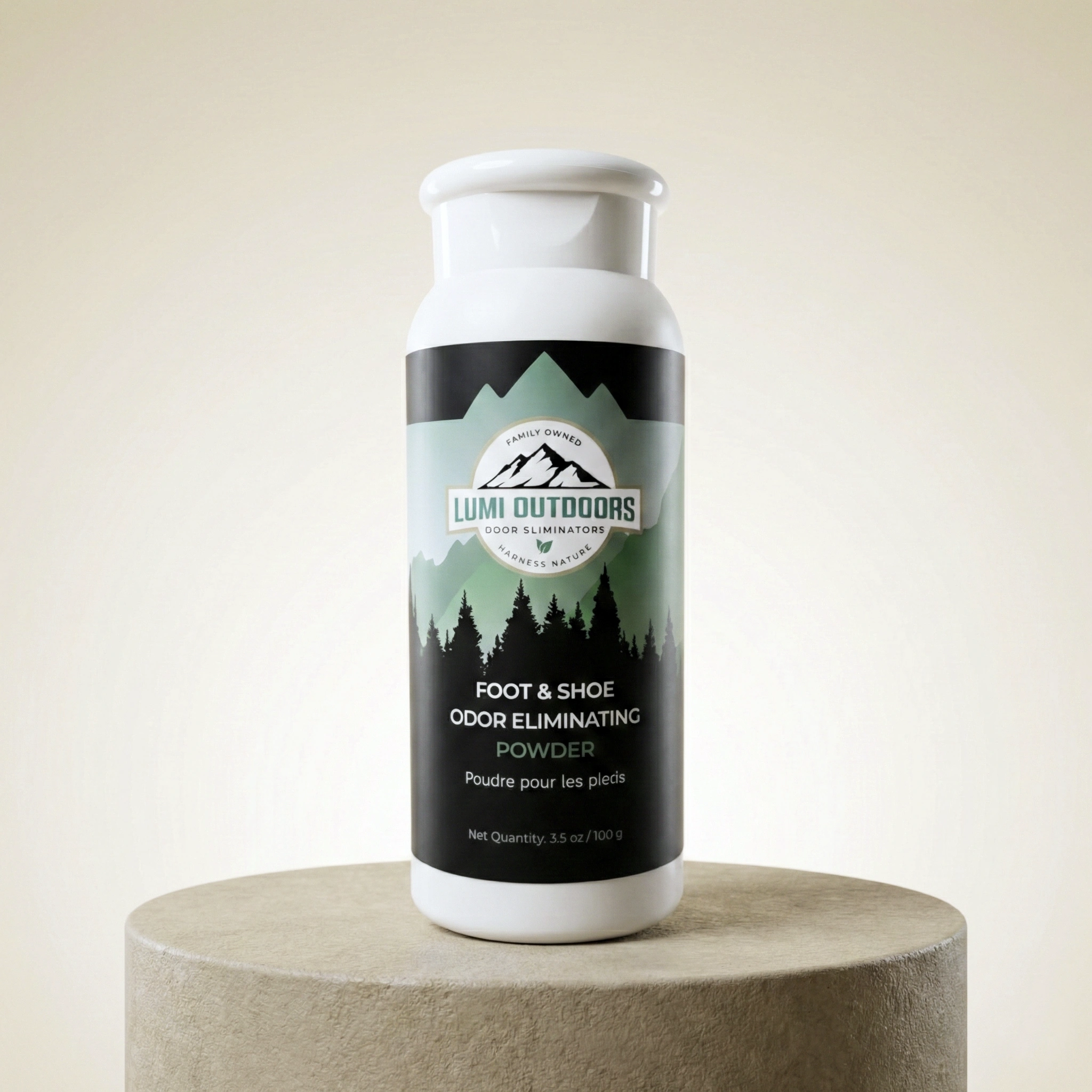
The best way to fight odor is to stop it before it starts. Our all-natural, talc-free foot powder is your first line of defense against mois...
- ABSORBS SWEAT & NEUTRALIZES ODOR
- ALL-NATURAL & TALC-FREE FORMULA
- PROUDLY FAMILY-OWNED & MADE IN UTAH
- THE "FRESH CONFIDENCE" GUARANTEE