
Stop! Using Alcohol on Football Boots Might Ruin Your Cleats
- Alcohol is a solvent, not just a disinfectant It dissolves the adhesives bonding your cleat's soleplate, strips oils from leather, and leaches plasticizers from synthetic uppers — often before you notice visible damage.
- The odor fix is temporary, the damage is permanent Alcohol evaporates off the surface but leaves the bacteria in the foam lining untouched, so the smell returns within 24 hours while the structural damage accumulates.
- Safe deodorizing is a 4-step process Brush, wipe with pH-neutral soap, treat with a plant-based spray, and air-dry with newspaper — no alcohol, no heat, no shortcuts that cost you a pair of boots.

Does Alcohol Ruin Football Boots? The Short Answer Is Yes
Alcohol — whether rubbing alcohol or isopropyl alcohol — is a solvent, and solvents attack the adhesives that bond your cleat's soleplate to its upper. A single application might seem harmless, but repeated use causes sole separation, dried-out materials, and cracked uppers that no amount of field tape will fix permanently.
That's the real problem. Most players reach for alcohol because it feels like it's doing something — that sharp, clinical evaporation must mean it's killing bacteria, right? It is, briefly. But the isopropyl alcohol (typically 70–91% concentration in household bottles) doesn't distinguish between odor-causing bacteria and the plasticizers keeping your synthetic upper soft and game-ready.
Football boots — especially modern high-performance ones — are engineered with thin, precisely bonded layers. The upper might be K-leather, microfiber, or a TPU film. The adhesive holding the outsole together is usually a polyurethane or contact cement compound. Alcohol attacks all three. According to materials science research published by the American Chemical Society, isopropyl alcohol is a well-documented solvent for polyurethane-based adhesives — the exact class used in most premium cleat construction.
The smell might seem like the bigger problem today. It isn't.
Why Do Football Boots Smell So Bad in the First Place?
Football boot odor comes from bacteria — specifically Brevibacterium and Staphylococcus species — feeding on the sweat and dead skin cells trapped in the boot's foam lining. A single training session can deposit enough sweat to keep bacterial colonies active for 24–48 hours after you take the boots off.
Synthetic boot linings absorb and hold moisture better than almost any other footwear because they're designed to be tight and responsive — which also makes them perfect bacterial incubators. The foam insole is particularly bad: it's porous, rarely fully dries between sessions, and sits right against your foot. Most of the smell isn't coming from the outside of the boot at all.
This is why a surface wipe with alcohol feels like it works. You're neutralizing bacteria on the top layer, but the source — the damp foam 5mm below — is completely untouched. The odor comes back within a day because the colony never actually stopped. You've won a battle and lost the war.
For a deeper look at why rubbing alcohol creates this false-fix cycle on footwear, this breakdown of rubbing alcohol on smelly shoes covers the mechanism in detail.
Most players spray deodorizer into their boots right before putting them away — but the most effective window is actually the first 10 minutes after you take them off, while the foam is still warm and the pores are open. A spray applied to a warm lining penetrates roughly twice as deep as one applied to a cold, compressed boot the next morning. Pull the insoles out first, spray both the insole and the interior lining, then stuff with newspaper.
What Does Alcohol Actually Do to Cleat Materials?
Alcohol leaches plasticizers from synthetic uppers, causes leather to dry out and crack, clouds or peels TPU surface films, and weakens the polyurethane adhesive bonds at the soleplate — all without removing the bacteria embedded in the boot's foam lining.
Let's be specific about each material type, because it matters for your boots.
K-leather (Kangaroo leather) is the most alcohol-sensitive material. The natural oils in K-leather are what make it form-fit to your foot over time — that glove-like feel serious players pay a premium for. Alcohol strips those oils in one go. The leather doesn't feel dry immediately; it feels fine. Then, about two weeks later, the surface starts showing hairline cracks along the flex points of the toe box.
Synthetic microfiber uppers — used in most mid-range and budget boots — contain plasticizers that keep the material pliable. According to research on polymer degradation, isopropyl alcohol dissolves low-molecular-weight plasticizers over repeated exposure, causing the upper to stiffen. A stiff upper means reduced ball feel and a boot that no longer fits like it did. That aerodynamic second-skin effect you paid for? Gone.
TPU films are the thin, vacuum-sealed coatings on boots like the Nike Mercurial or Adidas X Speedportal. They give the boot its glossy finish and ball-grip texture. Alcohol can cloud these films after just a few applications — the surface takes on a whitish, hazy appearance that doesn't buff out.
Not even close to worth the risk.
The adhesive issue is the most structurally serious. Sole separation — where the outsole starts to peel away from the upper — is expensive to repair and often happens gradually. You might not notice the first millimeter of lift until it's a 3cm gap mid-game. At that point, most cobblers can't do much; the bond surface is contaminated.
Is Hand Sanitizer a Safer Alternative for Cleat Odor?
No. Hand sanitizer is not a safer workaround — it typically contains 60–70% ethanol or isopropanol, which poses the same solvent risks as rubbing alcohol, plus additional damage from thickeners, humectants, and synthetic fragrances that can stain and degrade boot materials.
This is a common workaround people try after reading that "alcohol kills bacteria." And to be fair, the logic isn't crazy. But hand sanitizer is formulated for skin, not engineered materials. The glycerin and carbomer thickeners in gel-based sanitizers can leave a residue in the boot lining that actually traps more moisture over time — the opposite of what you want. For the full picture on why this approach backfires, the article on hand sanitizer on smelly shoes is worth a read.
If you've already used alcohol or hand sanitizer on your boots, do a quick flex test: bend the upper at the toe box and hold it for five seconds. If you feel resistance or hear a slight creak that wasn't there before, the plasticizers are already compromised. Check the soleplate edges for any lifting at the seam — press gently along the perimeter. Early-stage separation can sometimes be re-bonded with a contact cement designed for footwear (Barge is a well-regarded option), but you'll need to address the adhesive before it progresses.
How to Safely Deodorize Football Boots Without Causing Damage

The safest and most effective approach is a three-step process: mechanical cleaning first, then a pH-neutral wipe-down, followed by a targeted odor-eliminating spray or powder that addresses the odor source in the foam lining — with proper air-drying as the non-negotiable final step.
Here's what works, starting with what you likely already have at home.
Step 1: Mechanical cleaning. Use a soft-bristled brush (an old toothbrush works) to remove dried mud, grass, and debris from the upper and stud channels before doing anything else. Trying to deodorize a boot that still has organic material packed into the outsole is like mopping a floor before sweeping — you're just moving the problem around. Knock the boots together over a bin, then brush out what's left.
Step 2: The mild wipe-down. Dampen a clean cloth with water and add a single drop of pH-neutral soap — dish soap works, but a dedicated boot cleaner like the Jason Markk formula is genuinely better on K-leather. Wipe the interior and exterior, wring the cloth out, and wipe again with plain water to remove any soap residue. This step handles surface grime and surface-level bacterial contamination without attacking the adhesives or uppers.
Now remove the insoles. Wash them separately in warm water with a little soap, then leave them to air-dry completely before putting them back. This single habit — pulling the insoles out after every session — reduces interior moisture by roughly 40% compared to leaving them in, according to general footwear care guidance from the American Podiatric Medical Association.
Step 3: Target the odor source. For the foam lining and midsole, you need something that can penetrate the surface and address odor without damaging materials. A plant-based shoe deodorizer spray — specifically one using essential oils like lemon eucalyptus — is the right tool here. The Lumi Outdoor Extra Strength Shoe Deodorizer is the one I'd reach for: it uses concentrated lemon eucalyptus to neutralize odor at the source, and it's safe on all boot materials including K-leather and TPU films.
One honest note: the eucalyptus scent is noticeable for the first 10 minutes after spraying, then fades to neutral. And for deeply embedded odor in well-worn boots, you'll likely need two or three applications over a week before the smell is fully gone — not a one-shot fix.
Step 4: Air-dry correctly. This is where most people undo all their good work. Don't put boots near a radiator, in direct sunlight, or inside a gear bag. Heat accelerates the same adhesive breakdown that alcohol causes — polyurethane adhesives soften at sustained temperatures above 60°C (140°F), and a boot sitting on a radiator can easily exceed that. Stuff the boots with newspaper to absorb interior moisture, and leave them in a well-ventilated spot at room temperature. Replace the newspaper after an hour if the session was particularly wet.
For more on how professional sports environments handle gear freshness at scale, this piece on pro sports locker room protocols breaks down the actual methods used — and most of them are simpler than you'd expect.
One thing worth knowing: if your boots are past the point where a spray helps, cedar shoe trees left inside overnight will draw out residual moisture and help the upper retain its shape. They're one of the cheapest and most effective long-term maintenance tools for any footwear.
Want to freshen your boots without wrecking them?
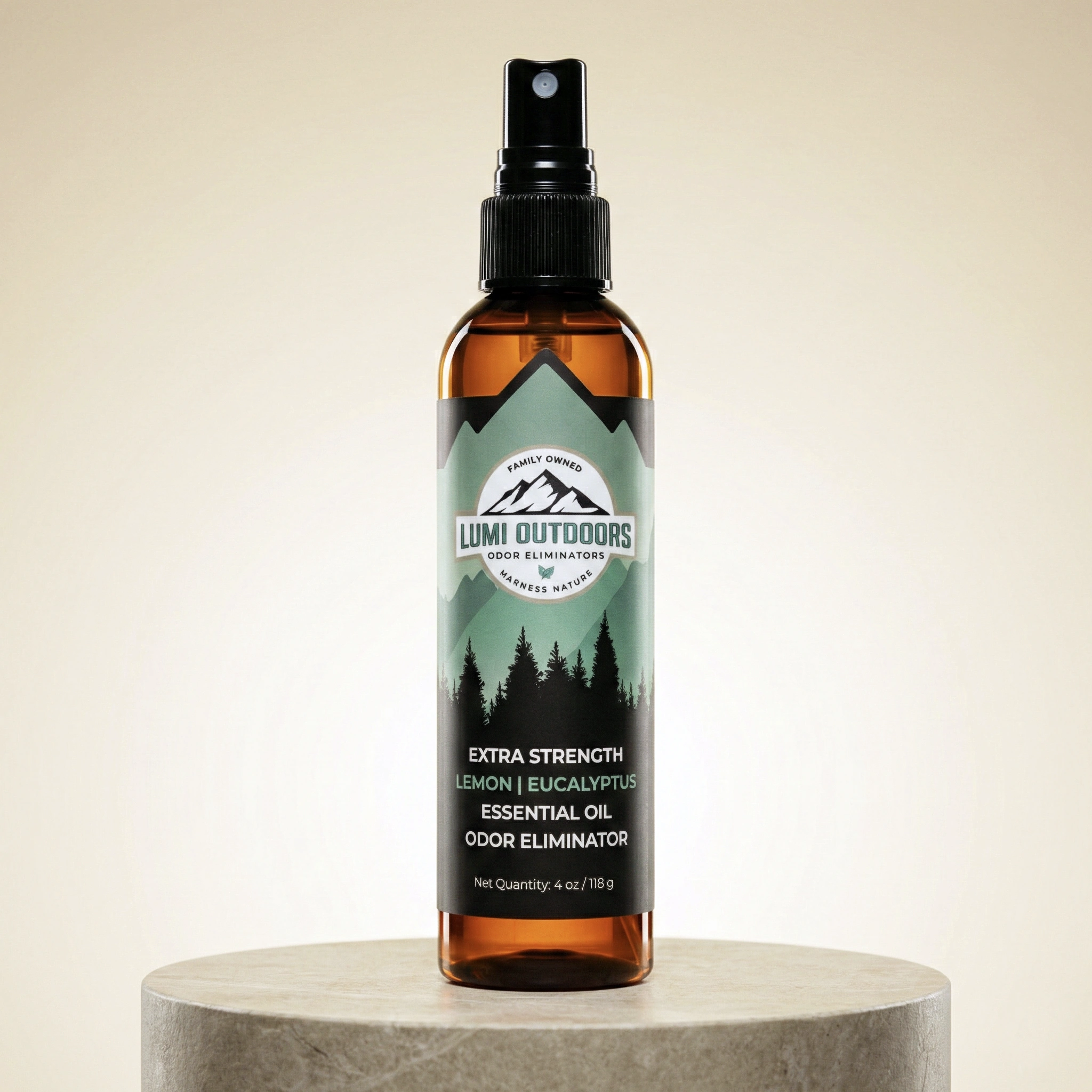
Join 1 Million+ Other People Who Chose Lumi to Conquer Their Shoe Odor.
- DESTROYS ODOR AT THE SOURCE, DOESN'T JUST MASK IT
- ALL-NATURAL & PLANT-BASED INGREDIENTS
- PROUDLY FAMILY-OWNED & MADE IN UTAH
- THE "FRESH CONFIDENCE" GUARANTEE