
Stinky Sneakers? Does the Kitty Litter Shoe Odor Hack Actually Work?
- It technically works, but only partly Kitty litter absorbs moisture and temporarily masks odor, but it does not neutralize the bacteria responsible for the smell.
- There are real downsides Silica dust is an irritant and litter residue mixed with sweat creates a gritty paste that worsens the problem.
- Better options exist for free Crumpled newspaper, cedar shoe trees, and a 24-hour shoe rotation all outperform the litter hack with zero downsides.

Kitty litter does absorb moisture in shoes and can temporarily mask odor — but it doesn't address the bacteria causing the smell, and it can physically damage shoe linings over time. It's a clever idea in theory, because litter is engineered to absorb liquid and neutralize ammonia-based odors. In practice, it's a short-term fix with some real downsides.
Here's why the hack is only half the story — and what a more complete approach actually looks like.
Why Does Kitty Litter "Work" at All?
Kitty litter reduces shoe odor by pulling moisture out of the shoe interior, which temporarily limits the damp environment that odor-causing bacteria need to thrive. Clay-based litters use capillary action to absorb liquid, and many contain baking soda or activated carbon to neutralize ammonia-type smells. Those are real mechanisms — which is why the hack spread in the first place.
The bacteria most responsible for that sharp, cheesy shoe smell is Brevibacterium linens — the same organism that gives aged cheeses their rind aroma. It feeds on dead skin cells and thrives in warm, moist, low-oxygen environments. A sweaty sneaker is basically a five-star hotel for it. So anything that removes moisture does slow the process down.
That's the logic behind the litter hack. And it's not wrong, exactly.
But there's a significant gap between "slows bacteria" and "eliminates odor." Removing moisture after the fact is reactive — you're managing a symptom, not the source. The bromodosis (the clinical term for smelly feet and shoes) persists because the bacterial colony doesn't die when the shoe dries out. It just pauses. Next time you slip those shoes on, the warmth and sweat restart the cycle within minutes.
What Are the Real Limitations of the Kitty Litter Method?
The kitty litter method has three practical problems: it doesn't neutralize bacteria, it can leave abrasive residue inside the shoe, and silica-based litters carry an inhalation concern that most people don't think about.
Start with the chemistry mismatch. Cat litter is engineered for feline urine, which is heavily concentrated with urea, ammonia, and specific proteins. Human sweat has a completely different chemical profile — it's a dilute mix of sodium chloride, lactic acid, and skin oils. The neutralizing agents in litter (primarily baking soda and zeolite) aren't calibrated for what's actually happening inside your shoe. They help a little. They don't solve it.
Then there's the physical damage issue. Bentonite clay — the dense, clumping mineral in most traditional litters — is genuinely abrasive. Pour it into a sneaker, shake it around overnight, and you've essentially let fine-grit particles work against the fabric lining and insole foam. Over time, this accelerates wear on the interior of the shoe. Expensive cleats and dress shoes are especially vulnerable.
The third issue is silica dust. Many "crystal" litters are made from amorphous silica gel, which releases fine particulate when handled. The U.S. Occupational Safety and Health Administration (OSHA) classifies crystalline silica dust as a respiratory hazard with repeated exposure. Shaking silica litter into a shoe in an enclosed space — a mudroom, a closet — isn't the same as industrial exposure, but it's not something you want your kids doing daily with their school shoes either.
And the "clay paste" problem is exactly as unpleasant as it sounds. When litter residue mixes with the next day's sweat, you get a gritty gray sludge that's hard to clean out and creates a new surface for bacterial growth. You've traded one problem for a messier one.
Most people treat shoe odor after the smell is already noticeable — but by that point, the bacterial colony is well-established in the foam and fabric layers, and surface-level fixes won't fully reach it. The more effective approach is to start prevention the first time you wear a new pair of shoes: dust the interior with a talc-free powder before the first wear, and you significantly delay the point at which any deeper treatment is needed.
What Actually Works for Persistent Shoe Odor?

The most effective approach combines moisture prevention with odor neutralization — ideally using a talc-free powder inside the shoe and allowing a full 24-hour dry rotation between wears. These two steps address both the chemical and biological sides of the problem.
On the moisture side, a talc-free powder applied directly to the shoe interior (or to your feet before putting shoes on) creates a dry environment that significantly slows bacterial growth. Look for formulas with arrowroot powder, kaolin clay, or zinc oxide — these are fine enough not to cake, and far gentler on shoe materials than bentonite. Lumi's Natural Foot Powder is exactly that format — talc-free, lemongrass-scented, and designed for daily use in shoes or directly on feet.
For odor already in the shoe, a plant-based spray can neutralize it more effectively than passive absorption. If you want to see how that fits into a broader strategy, these five natural shoe odor hacks cover the full approach.
The free version: stuff your shoes with crumpled newspaper overnight. Newsprint is surprisingly effective at absorbing residual moisture — not as targeted as a purpose-made powder, but genuinely useful and zero cost. Cedar shoe trees do the same job while also inhibiting mold, and they're reusable for years. Dr. Scholl's Odor-X insoles use activated charcoal and work well for passive overnight deodorizing, though they need replacing every few months.
What none of these will do is fix a shoe that's already deeply saturated with bacterial byproduct. At that stage, you need a spray that can reach the foam and fabric layers — not just sit on the surface. That's a different problem, and worth treating separately before switching to a preventative routine.
One step most people skip: rotating shoes every 24 hours. It sounds simple, but it's the single most impactful habit change you can make. Shoes need at least a full day to dry out completely — EVA foam midsoles can hold moisture for 12–18 hours after a workout. Wearing the same pair daily is essentially guaranteeing the bacterial environment never fully resets.
Can Kitty Litter Dust Actually Irritate Your Skin or Feet?
Yes — bentonite clay residue left inside a shoe can over-dry the skin on your foot, and when mixed with sweat it creates an abrasive paste that can lead to minor skin irritation, especially on the heel and ball of the foot.
Clay is a powerful desiccant. That's why it's in litter, and why it's also used in facial masks to draw out oils. Applied to the delicate skin of your foot in a warm, confined space, it can strip the skin's natural moisture barrier with repeated contact. People with sensitive skin or any tendency toward dryness are especially susceptible.
The contrast with a talc-free foot powder is worth noting here. Ingredients like zinc oxide (used in sunscreen and diaper rash cream) and kaolin clay (used in facial masks) are common in products made for skin. They absorb moisture without aggressively stripping it. That's a fundamentally different mechanism from industrial-grade bentonite.
If you've been using the litter hack and noticed dry, cracked skin on your heels afterward — that's probably why. And it's worth checking out why other popular DIY fixes have similar hidden costs before doubling down on them.
The bottom line on kitty litter as a shoe hack: it's a creative use of available materials, and it's not dangerous in a one-off situation. But as a regular routine, the combination of bacterial persistence, material abrasion, and skin dryness makes it a net negative compared to tools actually designed for the job.
A bag of cedar shoe trees from any hardware store — combined with one good rotation habit — will outperform the litter hack every single time.
Want to stop shoe odor before it starts?
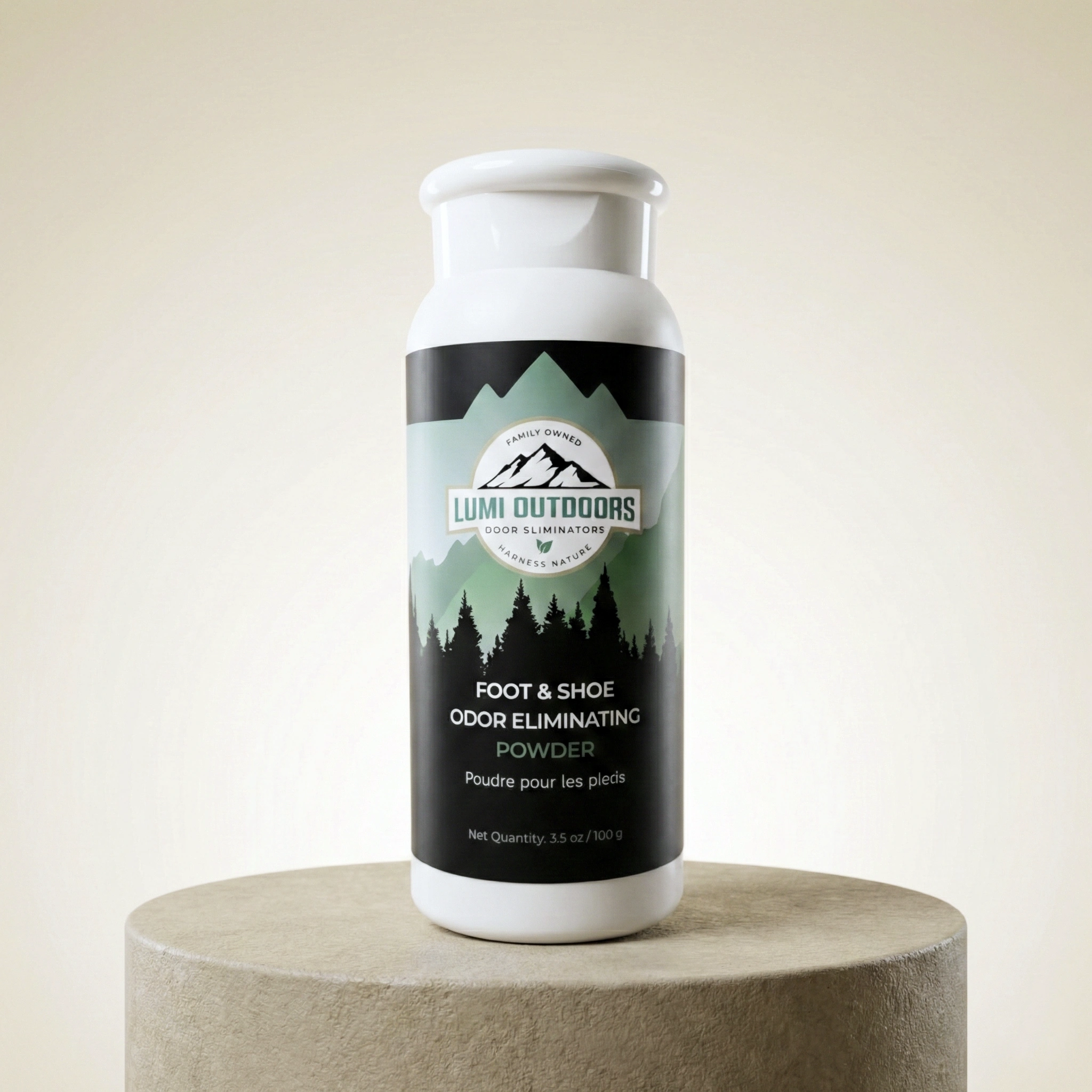
The best way to fight odor is to stop it before it starts. Our all-natural, talc-free foot powder is your first line of defense against mois...
- ABSORBS SWEAT & NEUTRALIZES ODOR
- ALL-NATURAL & TALC-FREE FORMULA
- PROUDLY FAMILY-OWNED & MADE IN UTAH
- THE "FRESH CONFIDENCE" GUARANTEE
Frequently Asked Questions
How long should you leave kitty litter in shoes?
Is silica crystal litter safer to use in shoes than clay litter?
Does freezing shoes actually kill odor-causing bacteria?
What is the fastest way to deodorize shoes without buying anything?