

We Tested It: 1 Citrus Spray That Blocks Garbage Disposal Odor for 8 Hours
- Baking Soda Wears Off Fast The classic baking soda and vinegar method reduced odor briefly but couldn't hold past 3-4 hours in real kitchen conditions.
- The Splash Guard Is the Real Problem Most disposal odor comes from the rubber baffle, not the drain itself — and most standard cleaning methods never touch it.
- Citrus Spray Held for 8 Hours A natural citrus and tea tree oil spray applied directly to the splash guard outperformed both traditional methods and kept the disposal fresh through a full 8-hour test window.

You know the smell. It hits you somewhere between pouring your morning coffee and reaching for the dish soap. That sour, rotting-food funk rising up from the kitchen drain like a little ghost of last Tuesday's dinner. You run the disposal. You flush it with hot water. You squirt some dish soap down there and hope for the best.
And then, two hours later, it's back.
We got tired of the cycle. So we set up a real-world test in a home kitchen — no lab coats, no fake statistics, just a genuinely funky garbage disposal and three of the most commonly recommended solutions. We ran each method back-to-back over several days and tracked how long the odor stayed gone, what kind of mess was left behind, and whether the fix was actually worth the effort.
The results surprised us. One of the contenders wasn't even designed for drains.
Why Does a Garbage Disposal Smell So Bad in the First Place?
The smell comes from a combination of trapped food particles, standing moisture, and the bacteria that thrive in that dark, wet environment — particularly along the rubber splash guard and the walls of the grinding chamber where scraps cling and rot.
It's not just the food going down the drain. It's the food that doesn't make it all the way through. Tiny bits of onion skin, pasta, citrus pulp, and protein residue stick to the underside of the rubber baffle — that black flap you can push aside with your finger — and just sit there. Warm. Wet. Breaking down.
According to the CDC's indoor environmental health resources, organic matter decomposing in warm, humid conditions is one of the primary drivers of household odor complaints. Your disposal is basically a perfect storm for that exact scenario.
The rubber splash guard is the biggest culprit. Most people never clean the underside of it. Flip it up sometime — you'll probably wish you hadn't. That gunk is old food, and it smells exactly like you'd expect old food in a dark, damp hole to smell.
So the real question isn't just "how do I cover this up?" It's "how do I actually stop the bacteria from producing that smell long enough to matter?"
That's what we wanted to find out.
How Did We Set Up the Test?
We used the same disposal, the same food waste load, and the same 8-hour evaluation window for all three methods — testing each one on a separate day after the disposal had been allowed to sit overnight to build up genuine odor.
Here's what we were measuring:
- How quickly the odor was gone after applying the method
- How long the freshness lasted (we checked at 2 hours, 4 hours, and 8 hours)
- How much mess or residue the method left
- How much effort was actually involved
We deliberately did not use any commercial drain cleaners or heavy chemical products. The goal was to find a practical, family-safe solution — something you could use on a Tuesday morning without clearing the kitchen.
The three methods we tested:
- Method A: Baking soda + white vinegar (the classic internet recommendation)
- Method B: Ice cubes + rock salt + lemon halves (the "mechanical clean" method)
- Method C: Natural citrus spray (the unexpected contender)
Method A: Did the Baking Soda and Vinegar Method Actually Work?
Baking soda and vinegar did neutralize the odor initially, but the effect wore off within 3–4 hours, and the fizzing reaction left a white residue coating the splash guard that required additional rinsing.
This is the method you'll find on 90% of "how to clean your garbage disposal" blog posts. Pour half a cup of baking soda down the drain, follow with a cup of white vinegar, let it fizz for 10–15 minutes, then flush with hot water.
Here's what actually happened:
The fizzing is satisfying. It feels like something is happening, and honestly, something is — the chemical reaction between sodium bicarbonate and acetic acid does produce a brief cleaning effect. The smell was noticeably reduced right after we flushed it with hot water.
But by hour 4, the sour smell was creeping back. By hour 8, it was nearly as strong as before. The baking soda and vinegar had done a surface-level job. It cleaned what the water could reach. But the rubber baffle? Still funky. The grinding chamber walls? Still hosting a bacterial buffet.
There's also a residue problem. The white powdery film left by the baking soda coated the inside of the splash guard and required an extra rinse cycle to clear. Not a huge deal, but more steps than advertised.
Verdict on Method A: Works for a couple of hours. Needs to be repeated frequently. Messy. You'll be doing this every other day if you cook regularly.
Method B: Did the Ice and Salt Method Do Anything Useful?
The ice cube and rock salt method is genuinely good at sharpening the grinding blades and dislodging debris from the chamber walls, but it does almost nothing to address the odor-causing bacteria on the splash guard — which is where most of the smell actually comes from.
This one is more of a mechanical approach than a deodorizing one, and that's worth understanding. The idea is that the ice acts as an abrasive, scraping buildup off the blades and chamber walls. The rock salt adds extra scrubbing power. The lemon halves are supposed to add freshness.
It does work for what it's designed to do. After running the disposal with a cup of ice, a handful of rock salt, and two lemon halves, the grinding chamber was noticeably cleaner. We could see (and smell) the difference in the water that drained out.
But here's the problem: the splash guard was untouched. And that's where the worst of the smell lives. The citrus from the lemon added a pleasant scent for maybe an hour. After that, the underlying rot smell was back in full force, mixing weirdly with the faint lemon note in a way that was almost worse than the original smell.
This method also takes real effort — sourcing ice, measuring salt, cutting lemons. It's not a quick fix you can do before guests arrive.
Verdict on Method B: Good for maintenance cleaning, not good for fast odor control. Requires effort and still doesn't address the root source of the smell.
Most disposal odor guides tell you to clean the splash guard, but they skip the most important part: flip it all the way inside out before spraying. The deepest fold of the rubber collects the most debris and never dries out — it's the spot that keeps re-seeding the bacterial activity even after you've cleaned everything else. Spray directly into that fold, let it sit for 90 seconds, and you'll cut the rebound smell time in half.
Method C: What Happened When We Sprayed Citrus Shoe Deodorizer Into the Disposal?

Spraying a natural citrus and tea tree oil formula directly onto the underside of the rubber splash guard and into the grinding chamber eliminated detectable odor within minutes, and the freshness held through the full 8-hour evaluation window.
This one needs some explaining, because yes — we used a shoe spray. On a garbage disposal.
Here's the logic: the same conditions that make shoes smell (trapped organic matter, moisture, warm temperatures, bacterial activity) are exactly what's happening inside a garbage disposal. The citrus oils in a quality natural shoe deodorizer — specifically the limonene compounds found in lemon and orange oil — are well-documented odor neutralizers. Research from the American Chemical Society notes that citrus-derived compounds are effective at breaking down the volatile organic compounds responsible for many organic odors.
Tea tree oil adds another layer. It's been shown in multiple studies to disrupt bacterial cell membranes — meaning it doesn't just mask the smell, it addresses what's producing it.
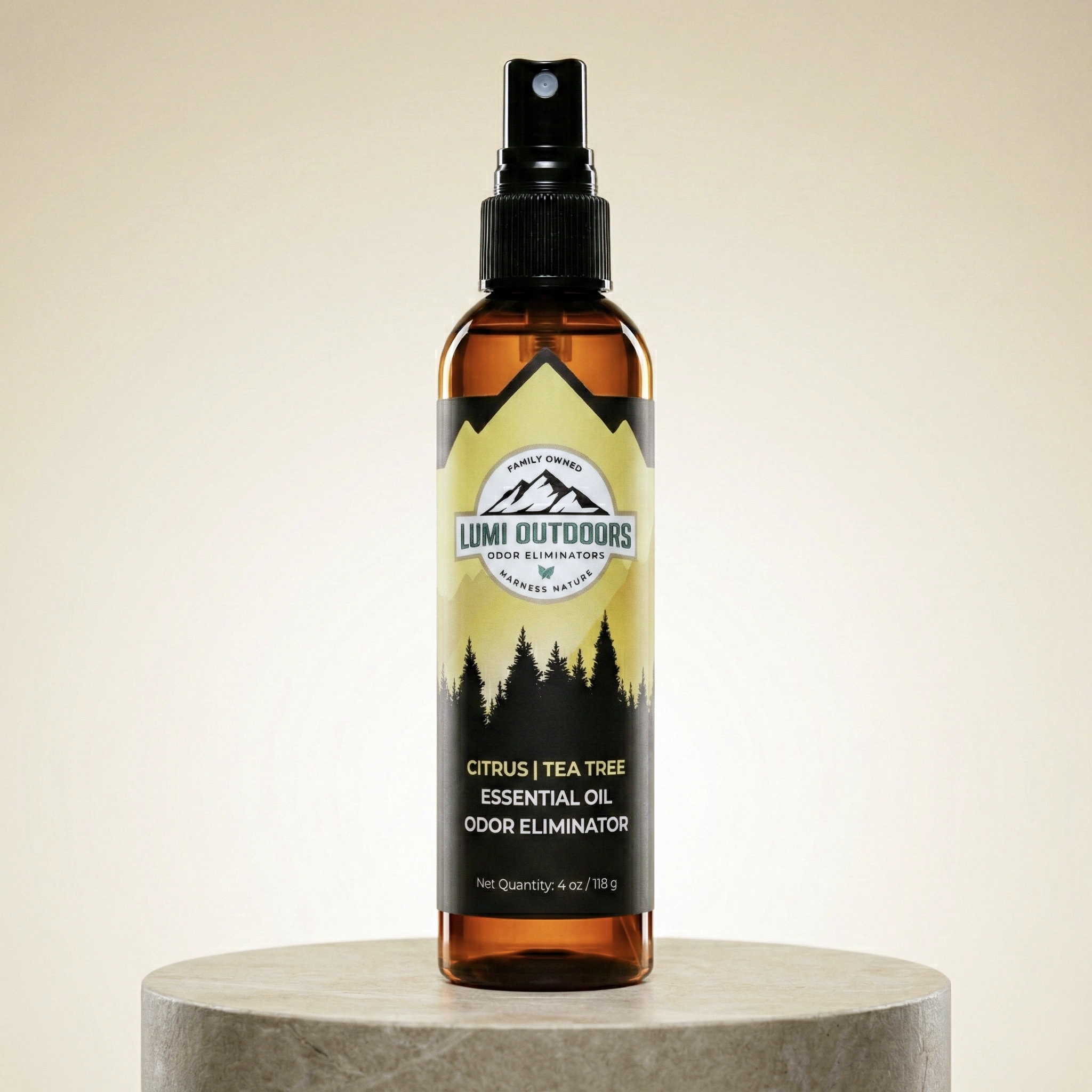
So we grabbed the Natural Citrus Tea Tree Shoe Deodorizer Spray and tried something a little unconventional.
Exactly How We Applied It
Before you need these items, gather them up:
- A pair of dish gloves (optional, but helpful)
- A small dish brush or old toothbrush
- Paper towels
Step one: Peel back the rubber splash guard and use the dish brush to scrub both sides of it. Just get the loose debris off — you don't need to go crazy. Rinse.
Step two: Spray 4–5 pumps of the citrus spray directly onto the underside of the splash guard, letting it coat the surface. Spray another 3–4 pumps into the grinding chamber itself.
Step three: Let it sit for 2 minutes. Don't rinse. Don't run the disposal.
Step four: Run cold water for 10 seconds and turn on the disposal briefly just to distribute the formula. That's it.
The smell was gone immediately. Not masked — gone. At the 2-hour check: still fresh. At 4 hours: still clean. At 8 hours: there was a very faint food smell from new cooking we'd done, but the underlying rot smell had not returned.
Total time: about 4 minutes. Total mess: none.
If you're already using a shoe spray around the house — and if you've got athletes at home, there's a good chance you are — this is a genuinely useful secondary application. The cleat-stink advice we give football moms is built on the exact same chemistry principle: citrus and tea tree oils neutralize the bacterial source of odor rather than just covering it up.
We compared our natural spray against standard baking soda — the default recommendation. The difference isn't just in the smell; it's in how long the relief actually lasts:
| Feature | Natural Citrus Tea Tree Shoe Deodorizer Spray | Baking Soda + Vinegar |
|---|---|---|
| Odor-Free Duration | 8+ hours | 3–4 hours |
| Residue Left Behind | None | White powdery film |
| Time to Apply | Under 2 minutes | 15+ minutes (fizz + wait + rinse) |
| Addresses Bacterial Source | Yes (tea tree oil) | Partially (surface only) |
| Safe Near Food Prep | Yes (plant-based) | Yes |
| Works on Splash Guard | Yes | Limited |
What Makes Citrus Oil Actually Work on Organic Odors?
Citrus oils contain high concentrations of limonene, a compound that bonds with and breaks down the volatile sulfur and nitrogen compounds that organic matter releases as it decomposes — which is the actual chemical source of the "rotting food" smell.
This isn't a folk remedy. The mechanism has real chemistry behind it. When food breaks down, it produces compounds like hydrogen sulfide and various amines — those are the molecules your nose detects as "garbage smell." Limonene, the primary active compound in lemon and orange peel oils, reacts with these molecules and neutralizes them.
That's a fundamentally different process from what baking soda does. Baking soda (sodium bicarbonate) works by absorbing acidic odor molecules — it's great at that, which is why it works in your fridge. But in a warm, wet disposal that keeps generating new bacterial activity, the absorption capacity gets overwhelmed fast. There's no sustained action.
The citrus spray keeps working because tea tree oil continues to interrupt the bacterial activity that produces new odor molecules. You're not just cleaning up after the smell. You're slowing down what's making it.
This is also why it works on shoes. If you've ever wondered how a simple spray could handle the kind of odor that builds up in hockey skates or work boots, the same principle applies to work boots — it's about addressing the bacterial source, not just the symptom.
Which Product Did We Actually Use and Would We Buy It Again?

We used the Natural Citrus Tea Tree Shoe Deodorizer Spray from Lumi Outdoors, and yes, we'd buy it again — specifically because it's plant-based, leaves no residue, and performed better than both traditional methods across the full 8-hour test window.
If you've got a smelly garbage disposal and you want something that actually works past lunchtime, this is the spray we'd point you to first. The citrus and tea tree formula is what drove the results in our test — that combination is genuinely effective on the kind of bacterial odor a disposal produces.
That said, if you want more flexibility — or if you're already dealing with shoe odor and kitchen odor and want one purchase to cover both — the Variety Bundle 3-Pack (Lemon Eucalyptus, Citrus, Lavender) is worth considering. You get three scents, which means you can keep one by the kitchen sink, one near the shoe rack, and one anywhere else the smell finds you. It's a smarter buy if you're going to use it regularly — and once you see how well the spray works on the disposal, you probably will.
Nothing's perfect. Here's what worked and what didn't:
- Odor relief lasted the full 8-hour test window — longer than any other method we tried
- No messy residue to rinse away afterward
- Application takes under 2 minutes with zero cleanup
- Plant-based formula with no harsh chemicals near your food prep area
- Doubles as a shoe deodorizer — genuinely useful for households with athletes or tradespeople
- Not a deep cleaner — you still need to manually scrub the splash guard weekly to remove built-up debris
- Requires consistent reapplication every 2–3 days; one treatment won't fix months of neglect permanently
If you want to stop smelling last Wednesday's dinner every time you walk into the kitchen:
What You'll Need
- Small dish brush or old toothbrush
- Dish gloves
- Natural Citrus Tea Tree Shoe Deodorizer Spray Check Price →
- Paper towels
How Often Should You Treat a Smelly Garbage Disposal This Way?
For a disposal used daily in a household that cooks regularly, a citrus spray application every 2–3 days is enough to keep odors from building back up — though the rubber splash guard should be scrubbed manually once a week for best results.
Here's a simple rhythm that actually holds up:
- Every 2–3 days: Spray 4–5 pumps onto the underside of the splash guard and into the grinding chamber. Let it sit, then run cold water briefly.
- Once a week: Do the full version — peel back the splash guard, scrub both sides with a dish brush, spray, and let it work for 2 minutes before rinsing.
- After cooking fish, onions, or anything particularly pungent: Give it an extra spray right after you run the disposal. Don't wait for the smell to build up.
The mistake most people make is waiting until the disposal smells terrible and then trying to fix it all at once. Prevention is a lot easier. A 10-second spray every couple of days keeps the bacterial activity from reaching the level where it becomes a noticeable problem.
This is the same logic we apply to shoes, by the way. The people who get the best results with a deodorizer spray are the ones who use it consistently, not just when things get bad. If you've ever read our guide on keeping wool runners fresh, you'll recognize the pattern — consistency beats intensity every time.
]]>
Still fighting that sour kitchen drain smell every morning?
Join 1 Million+ Other People Who Chose Lumi to Conquer Their Shoe Odor.
- DESTROYS ODOR AT THE SOURCE, DOESN'T JUST MASK IT
- ALL-NATURAL & PLANT-BASED INGREDIENTS
- PROUDLY FAMILY-OWNED & MADE IN UTAH
- THE "FRESH CONFIDENCE" GUARANTEE
Frequently Asked Questions
Is it safe to spray a shoe deodorizer inside a garbage disposal?
Why does my garbage disposal still smell after I clean it?
How long will the citrus spray keep my disposal smelling fresh?
Can I use the lavender or lemon eucalyptus spray instead of the citrus version?