

The Best Odor Hack for Smelly Nursing Shoes
- Bacteria is the real problem Nursing shoe odor comes from bacteria breaking down sweat in a warm, enclosed shoe — not just the sweat itself. Fixing that requires breaking down the organic compounds, not just covering them up.
- Essential oil sprays outperformed everything else After seven days of shift-wear testing, an essential oil spray was the only method that consistently reduced odor without leaving residue or damaging shoe materials.
- Prevention beats reaction Applying a talc-free foot powder before each shift dramatically slows odor buildup, making the after-shift spray work faster and last longer.

If you've ever peeled off your nursing shoes after a 12-hour shift and immediately regretted it, you're not alone. ER nurses are on their feet constantly — running, kneeling, stepping into spills, sweating through back-to-back codes. By hour 10, those clogs and sneakers have absorbed more moisture and bacteria than most shoes see in a week.
The smell is genuinely bad. Not "forgot to air these out" bad. More like "I had to leave them in the car" bad.
So we decided to actually test the most popular solutions nurses were using — baking soda, white vinegar sprays, charcoal insoles, and an essential oil spray — under realistic conditions. We ran each method for seven days on the same style of shoe, worn for a full shift. Here's exactly what we found.
Why Do Nursing Shoes Smell So Much Worse Than Regular Sneakers?
Nursing shoes trap more odor because they're worn for longer continuous periods in humid, high-fluid environments where feet sweat heavily with almost no ventilation breaks. That combination creates the perfect conditions for rapid bacterial growth.
Your average person wears shoes for maybe 4–6 hours. A nurse wears their shoes for 12–13 hours straight, often without sitting down for more than 20 minutes at a time. Sweat has nowhere to go. The foot contains around 250,000 sweat glands — more per square inch than almost anywhere else on the body — and a 12-hour shift can generate a significant amount of sweat in an enclosed shoe.
Add the clinical environment on top of that: humidity from the hospital floor, occasional fluid exposure, closed-toe requirements, and the fact that most nurses wear the same pair every shift. That shoe never truly dries out between wears. And when bacteria break down sweat proteins in a warm, damp space, the byproduct is the odor you already know too well.
The condition even has a clinical name — bromodosis — and it's caused specifically by that bacteria-on-sweat reaction. Understanding that changes how you approach the fix. You're not just masking a smell. You need to stop the bacteria and dry out the shoe.
What Methods Did We Actually Test on Smelly Nursing Shoes?
We tested four popular methods — baking soda, white vinegar spray, activated charcoal insoles, and an essential oil shoe deodorizer spray — over seven consecutive days on nursing shoes worn during full 12-hour shifts.
Here's how we judged each method:
- Smell after a full shift (sniff test by two people, no prior exposure)
- Smell the next morning, before the next shift
- Residue or material damage to the shoe
- Ease of use (could you realistically do this every night after a 12-hour shift?)
Method 1: Baking Soda
The classic. Pour some in, shake it around, let it sit overnight. Baking soda does absorb some moisture and can neutralize acidic odors, which sounds great in theory.
In practice? It helped a little on days one and two. By day four, the shoes smelled just as bad as before — maybe worse, because the baking soda had clumped and was trapping moisture rather than absorbing it. White powder residue was all over the inside of the shoe. And honestly, after a 13-hour shift, who wants to shake powder into shoes and vacuum it out in the morning? It's just not realistic.
Method 2: White Vinegar Spray
Diluted white vinegar in a spray bottle. The theory is that the acidity kills the bacteria. And it does, to some extent — but it also leaves the shoes smelling like vinegar for a day. That's fine at home, not fine when you're back on the floor at 6am.
The bigger problem: after seven days, the synthetic lining of the test shoe was visibly discolored. Vinegar is acidic enough to break down certain materials over time, especially the foam and fabric linings common in nursing clogs. One test shoe had light bleaching near the heel lining by day five.
Method 3: Activated Charcoal Insoles
These are more of a passive solution — you slip them in and they slowly absorb odor throughout the day. For mild odor, they're decent. But for a nurse who's been on shift all day? They were simply outmatched. After a full 12-hour shift, the shoes smelled noticeably bad regardless of the insoles.
The insoles did help somewhat with next-day freshness when shoes were stored overnight, which suggests they're better as a maintenance tool than a primary solution. Still, day seven results were noticeably worse than day one — they lose effectiveness fast in heavy-use conditions.
Method 4: Essential Oil Spray
This is where things got interesting. Unlike vinegar (which temporarily kills bacteria) or baking soda (which absorbs some odor), an essential oil formula actually breaks down the odor-causing compounds themselves. The essential oils neutralize the compounds that produce the smell — and once those are neutralized, there's nothing left to smell.
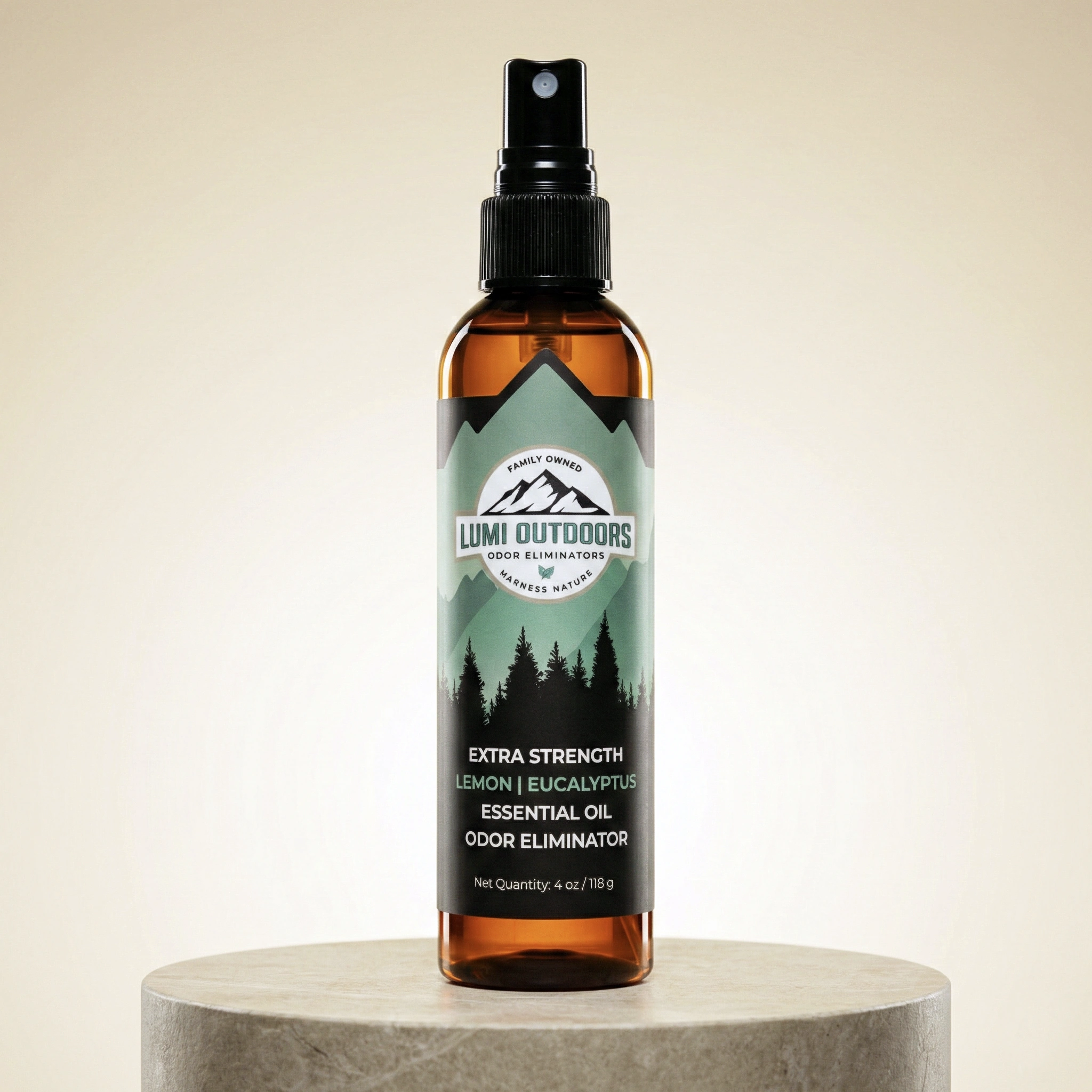
We used Lumi Outdoors' Extra Strength Shoe Deodorizer Spray (Lemon & Eucalyptus) for this test. Two or three sprays into each shoe after every shift. Let it air dry. That's it.
Day one through seven: the shoes stayed noticeably fresher, even after full shifts. No residue. No discoloration. No strange smell layered on top of odors. Just genuinely less smell. The lemon and eucalyptus scent was clean and light — gone by morning, so no scent walking into the hospital. And the actual shoe odor? Dramatically reduced compared to any of the other methods.
What You'll Need
- A second pair of nursing shoes for rotation
- A ventilated shoe rack or open shelf for overnight drying
- Extra Strength Shoe Deodorizer Spray Check Price →
- Clean, dry socks worn at the start of every shift
How Does an Essential Oil Spray Actually Work Against Shoe Odor?

Essential oil sprays work by breaking down the specific proteins and organic compounds left behind by sweat and bacteria — essentially eliminating the source of the odor rather than covering it up or temporarily suppressing it.
Think of it like this: most air fresheners spray a new smell on top of an old smell. Baking soda absorbs some of the smell. Vinegar kills some of the bacteria that make the smell. But an essential oil spray goes after the actual compounds causing the odor. Once those compounds are broken down, the smell is gone — not masked, not suppressed, gone.
That's why the results held up over seven days instead of fading after two or three. Each spray was resetting the environment inside the shoe, not just buying time until the next wash.
It's also why this approach is particularly well-suited to nursing shoes. You can't wash them every other day. You can't leave them to air out for 48 hours. You need something that works in an 8-hour overnight window and doesn't damage materials with repeated daily use.
Most nurses spray the inside of their shoes and immediately put them away in a bag or locker — and that's exactly the wrong move. Essential oil formulas need airflow to work properly. After spraying, set shoes upright with the opening facing up in a space with air circulation. Even resting them on their sides with tongues pulled open makes a measurable difference in how well the formula penetrates the lining and how quickly it dries. A sealed bag traps the moisture that feeds the bacteria you're trying to eliminate.
Is There a Way to Stop the Odor Before It Even Starts?
Yes — applying a talc-free natural foot powder before your shift creates a dry environment inside the shoe, which dramatically slows the bacterial growth that causes odor in the first place.
The spray handles what's already there. But if you want to get ahead of the problem, the answer is moisture control. Sweat is the fuel. Cut the fuel, and the odor cycle slows down significantly.
We also tested adding Lumi Outdoors' Natural Foot Powder as a pre-shift step — applied to feet and lightly dusted into shoes before putting them on. The results were noticeably better than using the spray alone. Shoes stayed drier throughout the shift, and the post-shift odor was milder, which meant the spray did its job faster overnight.
If you're dealing with chronic odor that just keeps coming back no matter what you try, that two-step approach is the one to go with. Powder before the shift, spray after. If you want both in one purchase, the Natural Foot Powder and Extra Strength Shoe Deodorizer Spray bundle pairs exactly those two products together at better value than buying separately.
This "prevent + eliminate" approach also mirrors what athletic trainers recommend for athletes with chronic foot odor issues — and if you're curious how that crosses over to other heavy-wear shoes, our guide on stopping youth cleat stink proactively covers the same two-step strategy in detail.
We compared our natural spray against common alternatives head-to-head. The difference isn't just the scent — it's in what each product actually does to the bacteria and moisture causing the problem:
| Feature | Extra Strength Shoe Deodorizer Spray | Baking Soda / Vinegar Methods |
|---|---|---|
| Eliminates odor at the source | Yes — essential oil formula breaks down odor compounds | Partially — neutralizes or masks temporarily |
| Safe for shoe materials after daily use | Yes — no discoloration or lining damage in 7-day test | No — vinegar caused visible lining discoloration by day 5 |
| Leaves residue inside shoe | None | Baking soda leaves heavy white powder residue |
| Realistic for post-shift use | Yes — 2-3 sprays, done in 10 seconds | No — baking soda requires cleanup, vinegar needs measuring |
| Performance after 7 days of daily use | Consistent odor reduction through all 7 days | Noticeable odor return by day 3-4 |
| Scent after application | Light lemon & eucalyptus, fully gone by morning | Vinegar smell lingers 12-24 hours |
What Should Nurses Actually Do Differently to Keep Shoes Fresh Longer?

The single biggest habit change that makes the most difference is never wearing the same pair of nursing shoes two shifts in a row — even a 24-hour break dramatically reduces the bacterial load built up inside the shoe.
This is what most guides skip. They focus on products and techniques, which matter — but shoe rotation is the foundational habit that everything else builds on.
Here's a realistic routine that accounts for actual shift schedules:
- Before shift: Apply foot powder to clean, dry feet. Dust lightly inside shoes.
- After shift: Remove shoes immediately. Spray two to three times into each shoe. Set them upright somewhere with airflow — not stuffed in a bag or locker.
- If rotating two pairs: The pair sitting out gets a spray and 24+ hours to dry before next use. This is genuinely the fastest path to eliminating chronic odor.
- Weekly: Wipe the inside lining with a damp cloth to remove residue. Let fully air dry before next wear.
Shoes worn in clinical settings also benefit from a specific storage habit: keep them separate from your regular clothes or gym bag. Hospital-environment shoes pick up ambient moisture and smells from the floor itself, and storing them in a sealed bag just locks all of that in. Leave them somewhere with airflow. Even a ventilated shelf in your car beats a sealed gym bag.
The same logic applies to other high-wear work shoes. If you've got a family member in construction or trades dealing with the same problem, our breakdown of how to safely deodorize Timberland PROs without damaging the waterproof leather covers the moisture-first approach for work boot materials specifically.
What's the Honest Verdict on These Methods After a Full Week of Testing?
Nothing's perfect — especially when you're dealing with footwear worn for 12-hour shifts in a hospital environment. Here's what worked and what didn't:
- Outperformed all three alternative methods in a 7-day real-shift test
- No residue, no discoloration — safe for daily use on all nursing shoe materials
- Takes under 10 seconds to apply after a 12-hour shift
- Plant-based formula with no harsh chemicals
- Scent dissipates fully overnight — no fragrance walking into the hospital
- Requires consistent nightly application to stay ahead of heavy-shift odor — skipping a night does set you back
- For the most severe cases, works best paired with the foot powder rather than used alone
The essential oil spray held up better than anything else across all four testing criteria: effectiveness, safety for shoe materials, ease of use, and sustained performance over seven days. The foot powder in combination made the biggest overall difference for nurses dealing with chronic, recurring odor.
Baking soda and vinegar aren't useless — they're just better suited to lighter odor situations. For nursing shoes worn through full clinical shifts? They're underpowered.
And if you've got other shoes in the house with stubborn odor that refuses to leave, these same principles apply. We've seen great results with the same essential oil spray on everything from running shoes to fashion sneakers — the guides on deodorizing Hoka Clifton 9s and why you should stop washing your Brooks Ghost cover the same approach for those specific materials.
]]>Ready to actually fix your nursing shoes instead of just surviving them?
Join 1 Million+ Other People Who Chose Lumi to Conquer Their Shoe Odor.
- DESTROYS ODOR AT THE SOURCE, DOESN'T JUST MASK IT
- ALL-NATURAL & PLANT-BASED INGREDIENTS
- PROUDLY FAMILY-OWNED & MADE IN UTAH
- THE "FRESH CONFIDENCE" GUARANTEE